

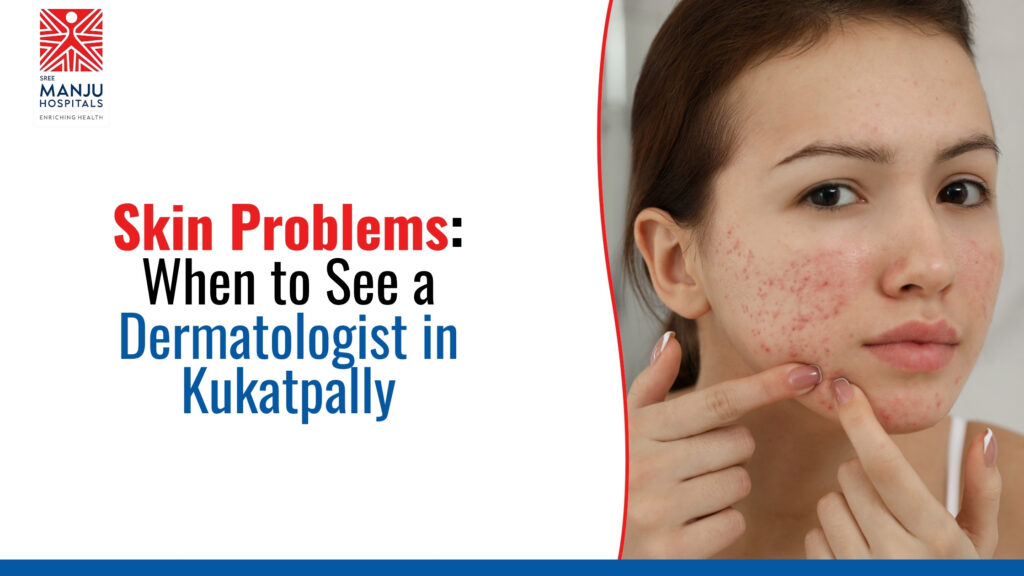
Skin Problems: When to See a Dermatologist in Kukatpally
A patch of itchy skin that won’t clear up no matter what cream you try. A ring-shaped rash that keeps coming back after every course of medicine. If Kukatpally’s heat and humidity have turned your skin against you this year, you’re far from alone.
This guide covers the most common skin problems in Hyderabad’s climate, which ones a home remedy can actually handle, and when it’s time to see a dermatologist in Kukatpally. Most skin conditions clear up quickly and completely once they’re diagnosed correctly, rather than guessed at.
Why does Kukatpally’s climate cause so many skin problems?
Heat and humidity are a near-perfect combination for fungal growth on skin. India’s hot, humid conditions make fungal skin infections dramatically more common than in drier climates, and dermatophytosis, the medical name for ringworm-type infections, affects an estimated fifth of the world’s population at any given time, with south India among the more affected regions (Mycopathologia, Springer).
Kukatpally adds its own layer to this. Long commutes on two-wheelers in Hyderabad’s heat, tight office wear, and sweat that doesn’t fully dry before the next meeting all create the warm, damp skin folds fungus thrives in. Hard water in parts of the locality doesn’t help either, often leaving skin drier and more reactive than it should be.
None of this is a hygiene failing. It’s simple biology meeting Hyderabad’s weather, and it responds very well to the right treatment.
What are the most common skin problems in Hyderabad’s climate?
A handful of conditions account for most dermatology visits in this weather:
- Fungal infections (ringworm, tinea): itchy, ring-shaped, often spreading patches, usually in skin folds, the groin, or under the arms
- Heat rash and sweat-related breakouts: small red bumps, especially on the back, chest, and neck during peak summer
- Acne flare-ups: humidity increases oil production, worsening breakouts even in people who rarely had acne before
- Contact dermatitis: red, itchy reactions to sweat, synthetic fabric, or new cosmetics
- Fungal nail infections: thickened, discoloured nails, common in closed shoes worn through humid days
- Pigmentation and tanning: sun exposure during commutes, gradually darkening patches on the face, neck, and arms
When should a skin problem worry you?
See a dermatologist if a rash hasn’t improved within two weeks, keeps spreading, or comes back soon after treatment stops. A few specific signs mean it’s worth booking sooner:
- A rash that’s spreading despite an over-the-counter cream
- Recurring ringworm, especially if it returns within weeks of finishing medication
- Pain, pus, or swelling around a skin patch, which can indicate a bacterial infection on top of the original problem
- Fever alongside a skin rash
- Sudden, widespread itching with no obvious cause
Why do fungal infections keep coming back after treatment?
This is one of the most common frustrations dermatologists see, and there’s a real reason behind it. Incomplete treatment courses, using a cream for a week when it needed three, are the most frequent cause of recurrence. Steroid-containing combination creams, widely available without prescription, often mask the itching temporarily while letting the fungus spread underneath, only for it to return stronger.
Reinfection from unwashed clothing, shared towels, or a partner with an active infection is another common route. And in India specifically, growing resistance to standard antifungal treatments has made some infections genuinely harder to clear with the same medicine that worked a few years ago.
A proper diagnosis with the right medication and the full course, rather than stopping the moment itching settles, is what actually breaks the cycle.
What does a dermatology consultation involve?
A first visit is usually quick and mostly visual. The dermatologist examines the affected skin, asks about how long it’s been present, what’s been tried already, and any pattern to flare-ups. Some conditions are diagnosed on sight; others need a simple skin scraping examined under a microscope, a painless test that confirms whether a fungus is present and helps choose the right medication.
For recurring conditions or unclear rashes, a longer conversation about occupation, clothing, sweating patterns, and any recent product changes helps pin down the actual trigger, not just the symptom.
How are skin problems in humid climates treated?
Treatment is matched to the specific condition rather than a single cream for everything:
- Fungal infections need oral or topical antifungal medication for the full prescribed course, typically two to four weeks, even after symptoms disappear.
- Heat rash and sweat breakouts usually respond to loose breathable clothing, staying dry, and mild topical treatment.
- Acne is managed with a combination of topical treatment and, for stronger cases, oral medication, alongside advice on what’s realistic for Hyderabad’s climate.
- Contact dermatitis improves once the trigger is identified and avoided, paired with a short course of anti-inflammatory cream.
- Chronic or recurring cases may need a longer-term plan, including preventive antifungal use during peak humid months.
Simple habits that keep skin problems away
A few daily changes make a real difference in this climate:
- Dry skin folds completely after a shower or sweaty commute, especially underarms and groin
- Wear breathable cotton rather than synthetic fabric during Hyderabad’s warmer months
- Change out of sweaty clothes rather than air-drying them on the body
- Don’t share towels, razors, or footwear, a common but overlooked route for fungal spread
- Finish every antifungal course completely, even once symptoms are gone
Small habits, but they’re the difference between one flare-up and a recurring problem.
If a rash, patch, or breakout has outlasted your patience or your home remedies, the dermatology team at Sree Manju HospitalsKPHB sees exactly this kind of climate-driven skin concern every week. The branch sits opposite Brand Factory in KPHB 5th Phase, with evening OPD slots that work around office hours and cashless insurance accepted.
Get it looked at properly
Skin problems in Hyderabad’s climate are common, well understood, and very treatable once diagnosed correctly. The difference between a two-week fix and a recurring frustration usually comes down to one accurate consultation instead of another guessed cream.
Book a dermatology consultation at Sree Manju Hospitals KPHB. Call +91 77779 32772 or walk in, opposite Brand Factory, KPHB 5th Phase, Kukatpally. A clear diagnosis, the right medication, and skin that actually stays clear.