

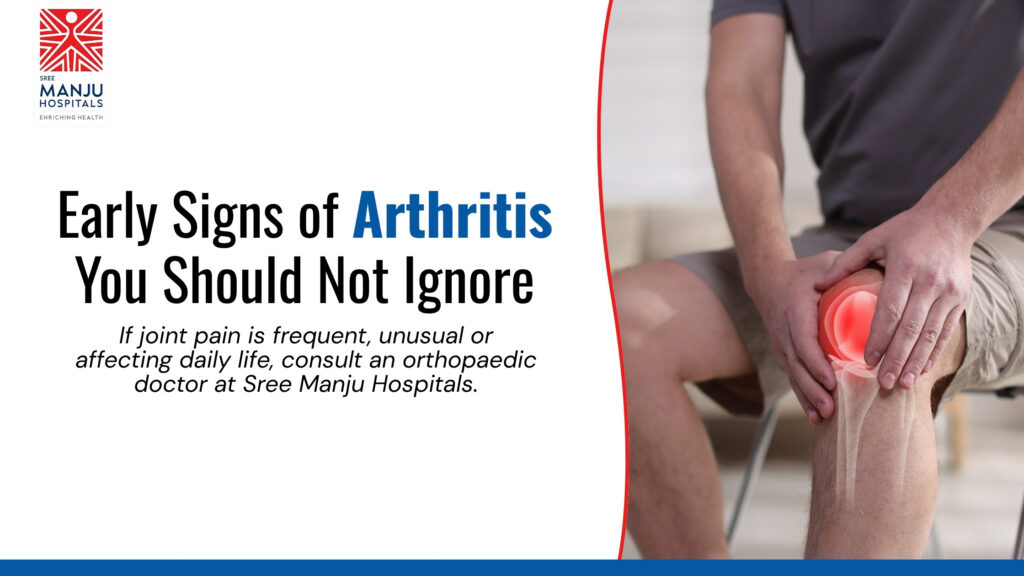
Early Signs of Arthritis You Should Not Ignore
Arthritis does not always begin with severe pain. In many people, it starts quietly.
A little stiffness in the morning. Knee pain after climbing stairs. Fingers feel tight while holding a cup. Mild swelling near a joint. Pain that comes and goes often gets ignored.
That is how arthritis often enters daily life. Slowly enough to be dismissed, but steadily enough to affect movement over time.
Many patients wait until the pain becomes difficult to manage. By then, the joint may already have inflammation, cartilage wear, stiffness or reduced strength. Early consultation can make a difference because arthritis is easier to manage when it is identified at the right time.
At Sree Manju Hospitals, the Orthopedics department helps patients with joint pain, stiffness, swelling, arthritis-related concerns and mobility issues. If pain is frequent, unusual or affecting routine movement, it is better to get it checked instead of waiting for it to worsen.
What Is Arthritis?
Arthritis is not one single disease. It is a broad term used for conditions that affect the joints. The most common concern is pain and stiffness in the joints, but arthritis may also cause swelling, warmth, reduced movement and difficulty doing everyday activities.
Some people develop arthritis because of age-related joint wear. Some may have inflammation in the joints. Some may develop symptoms after an old injury, lifestyle strain, excess weight, family history or other medical conditions.
The knees, hips, spine, hands, fingers, wrists and shoulders are commonly affected.
The mistake many people make is assuming joint pain is “just age.” Age can be one reason, but it is not the only reason. Even younger adults can develop arthritis symptoms, especially if there is injury, inflammation, obesity, poor posture, repetitive strain or autoimmune conditions.
Persistent Joint Pain Should Not Be Ignored
Pain is usually the first sign people notice.
It may begin as a dull ache in the knee, hip, back, shoulder, wrist or fingers. In the early stage, the pain may appear only after activity. A person may feel it after walking for a long time, using stairs, sitting on the floor, lifting weights, or standing for hours.
Over time, the pain may become more frequent.
This is when it needs attention. Pain that keeps returning, increases with movement or affects daily activities should not be managed only with painkillers. Painkillers may give short-term relief, but they do not explain why the joint is hurting.
A proper orthopaedic evaluation can help identify whether the pain is due to arthritis, injury, inflammation, muscle weakness, posture-related strain or another joint condition.
Morning Stiffness Is an Important Warning Sign
Many people with arthritis notice stiffness after waking up.
The joint may feel tight, heavy or difficult to move. Some patients say their knees take time to “open up” in the morning. Others feel their fingers are stiff while brushing, holding a cup or using the phone.
Mild stiffness for a few minutes may happen after poor sleep or physical strain. But stiffness that lasts longer, returns often or improves only after movement should be checked.
Morning stiffness is especially important because it may point towards inflammation in the joints. It can also affect confidence in movement. A person may start avoiding stairs, morning walks or floor-level sitting because the joint feels unreliable.
Stiffness is not just discomfort. It is often the joint asking for medical attention.
Swelling, Warmth or Redness Around the Joint
A swollen joint should not be ignored.
Swelling may appear around the knee, fingers, wrist, ankle or other joints. The area may feel warm to the touch. Sometimes the skin may look slightly red. In some patients, swelling comes and goes.
This usually means the joint is irritated or inflamed.
Swelling can happen because of arthritis, injury, infection, gout or other inflammatory conditions. Since the causes can differ, it is better not to assume. A doctor may examine the joint, check movement, ask about pain pattern and advise tests or imaging if needed.
Patients should seek medical care sooner if swelling is sudden, painful, associated with fever or makes walking difficult.
Difficulty Moving or Reduced Flexibility
Arthritis can slowly reduce how freely a joint moves.
A knee may not bend fully. A shoulder may feel difficult to lift. Fingers may not close properly into a fist. Hip stiffness may make walking uncomfortable. Back stiffness may make sitting, standing or turning difficult.
This reduced flexibility can affect daily life in small but frustrating ways.
Getting up from a chair takes longer. Sitting cross-legged becomes difficult. Climbing stairs feels tiring. Holding objects becomes uncomfortable. Walking distance reduces without the person realising it.
These changes should not be dismissed as normal ageing. When movement starts to reduce, the joint needs evaluation. Early treatment, physiotherapy, strengthening exercises, posture correction and lifestyle guidance may help protect function and reduce further discomfort.
Pain While Climbing Stairs or Walking
Knee arthritis often shows up during activities that put pressure on the joint.
Climbing stairs, walking uphill, standing for long hours or getting up from a low chair can become painful. Some people also feel a grinding or clicking sensation in the knee. Others feel the knee is weak or unstable.
This is common in people who are overweight, physically inactive, have old knee injuries, sit for long hours or do work that puts repeated strain on the joints.
Knee pain should be checked early because delayed care can affect mobility. A doctor can assess whether the pain is due to arthritis, ligament strain, meniscus injury, muscle weakness or another orthopaedic concern.
Joint Pain With Fatigue or General Weakness
Arthritis is not always limited to the joints.
Some types of arthritis, especially inflammatory arthritis, may also cause fatigue, low energy, mild fever, loss of appetite or a general feeling of being unwell. The patient may feel tired even without heavy activity.
This can be confusing because the symptoms may look unrelated at first.
If joint pain comes with tiredness, swelling, morning stiffness or pain in multiple joints, it should be discussed with a doctor. Early diagnosis is important in inflammatory arthritis because treatment can help control inflammation and protect joints from long-term damage.
When Should You See an Orthopaedic Doctor?
A doctor should be consulted if joint symptoms are frequent, worsening or affecting daily movement.
Visit an orthopaedic doctor if you notice:
- Joint pain lasting more than a few days
- Morning stiffness that keeps returning
- Swelling, warmth or redness near a joint
- Pain while walking, climbing stairs or standing
- Difficulty bending or straightening a joint
- Joint pain after an old injury
- Clicking, grinding or instability in the knee
- Pain that disturbs sleep
- Reduced ability to do daily activities
Patients should not wait until the pain becomes severe. Early assessment helps the doctor understand the stage of the condition and plan treatment accordingly.
How Arthritis Is Diagnosed
Diagnosis usually begins with a clinical examination. The doctor checks the painful joint, range of movement, swelling, tenderness, walking pattern and history of symptoms.
Depending on the case, the doctor may advise:
- X-ray
- Blood tests
- MRI or other imaging
- Inflammatory marker tests
- Uric acid test
- Physiotherapy assessment
Not every patient needs every test. The doctor decides based on symptoms, age, pain pattern and physical examination.
Treatment Options for Arthritis
Arthritis treatment depends on the type, stage and severity of symptoms.
In early stages, treatment may include medicines, exercise guidance, weight management, hot or cold therapy, physiotherapy and lifestyle changes. For some patients, joint strengthening and movement correction are very important.
In moderate or advanced cases, the doctor may discuss injections, advanced pain management options or surgery depending on joint damage and quality of life.
The goal is not only pain relief. The goal is to help the patient move better, reduce stiffness and continue daily activities with less discomfort.
Arthritis Care at Sree Manju Hospitals
Sree Manju Hospitals provides orthopaedic care for patients with joint pain, knee pain, stiffness, swelling, injury-related pain and arthritis symptoms. The hospital also has support from departments such as Physiotherapy and Radiology, which can help in diagnosis, recovery and mobility improvement when required.
For patients, this matters because arthritis care is not always a one-time consultation. Some patients need tests. Some need physiotherapy. Some need regular follow-ups. Some may need further orthopaedic treatment if the condition has progressed.
At Sree Manju Hospitals, patients can receive evaluation and guidance based on their symptoms, age, lifestyle and joint condition.
Conclusion
Arthritis should not be ignored until walking, bending or daily movement becomes difficult. Early signs like joint pain, morning stiffness, swelling, warmth, reduced flexibility and pain during routine activities can give patients enough warning to seek care.
The earlier the condition is evaluated, the better the chances of managing pain, protecting movement and slowing further joint damage.
If joint pain is frequent, unusual or affecting daily life, consult an orthopaedic doctor at Sree Manju Hospitals. Timely care can help patients understand the cause of pain and choose the right treatment before the condition becomes harder to manage.